Flex Movie Clips
The Flex Blog
Dallas Police Plan Widespread Warrantless Searches
Submitted by Scott Morgan on Thu, 02/18/2010 - 23:42As long as the public remains largely ignorant about 4th Amendment rights, police will continue to rely on coercive tactics that treat people as guilty until proven innocent:
Dallas police began a new initiative today to combat drugs. Citywide, officers are headed to suspected drug houses to "knock and talk" with the occupants.
The technique involves knocking on the door of a suspected drug house and trying to talk the people inside into inviting officers in to search without a warrant. Police can enter without a search warrant if they see illegal activity happening.
Dallas police have long used the technique, but its use will be widened during the next few months to include more officers and more areas within the city. [Dallas Morning News]
If this sounds to anyone like a program that only affects drug offenders, it's not. Police tactics like these are always framed as an effort to "get weapons and drugs off the street," but they are so much more than that. By definition, the people targeted under such policies are innocent citizens against whom police have no actionable evidence of criminal activity. After all, when police have credible facts indicating that drug crimes are taking place at a specific location, they may obtain a search warrant and enter lawfully.
The "knock and talk" approach is used exclusively to enter private residences in the absence of probable cause. Vague and unfounded suspicions, or even prejudices, could ultimately determine which locations are singled out for investigation. In the process, innocent people living in high-crime neighborhoods are placed at great risk of arrest in the event that a guest, neighbor or former tenant left something illegal on their property. Our upcoming video, 10 Rules for Dealing with Police shows exactly how that can happen.
As misguided as these tactics are, there is one simple option available to concerned citizens who don't want police digging through their drawers: just don’t let them in. Unless you give them permission to enter, police need a warrant to search your home. You may simply decline the search and tell the officers that you'll gladly cooperate if they return with a warrant. If that makes you uncomfortable, another option is not to answer the door at all, which also reduces the likelihood of police claiming that they saw or smelled something illegal when you opened the door for them.
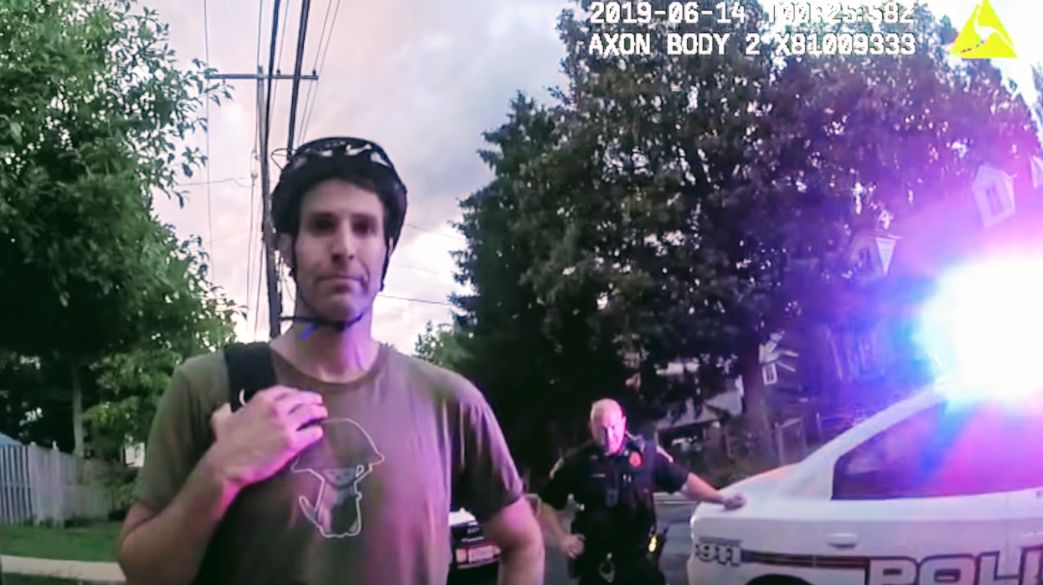
The bottom line is that invasive "knock and talk" programs don't work if everyone knows their rights, which is why the D.C. police simply canceled theirs after we started doing this:
Anyone in Dallas who's concerned about the new policy should consider organizing a similar effort.
10 Rules DVD Release Delay & DC Premiere Cancelation
Submitted by Steve Silverman on Wed, 02/10/2010 - 18:02There's no sugar-coating this, but the 10 Rules for Dealing with Police DVD won't be ready for the previously-announced February 12th release date. I know this is the second release date I've blown, and I apologize. Again.
Regardless, I will keep my commitment to get the new DVD into your hands ASAP. While I'm hesitant to announce another specific release date -- I expect to ship 10 Rules DVDs by late February or early March.
In the meantime, I offer a full order refund and cancellation to anyone who requests it. And for those of you who've already announced a 10 Rules screening event for February or early March, please email me your announcement. I can burn a pre-release DVD and ship it to you in time for your event at no additional cost to you.
For those of you planning to attend the 10 Rules DC screening premiere at the Cato Institute -- or watch the live webcast -- the event has been cancelled due to The Mid-Atlantic Snowpocalypse. The event will be rescheduled, and I'll keep you posted.
Again, I sincerely apologize for any inconvenience I've caused you.
When Police Mistake Candy for Crack...
Submitted by Scott Morgan on Tue, 01/26/2010 - 00:37Everyone's talking about this wild story from New York City, in which two men spent 5 days in jail for a bag of coconut candy. The driver consented to a search of his vehicle and both men were arrested after police discovered what they believed was crack cocaine. An officer told the passenger to "shut up" when he insisted it was candy, and the men had to wait in jail for almost a week before lab tests proved their innocence.
In addition to demonstrating the combined arrogance, incompetence, and contempt for innocent people that so often characterizes drug war policing, the story also provides another glaring example of how consenting to police searches can instantly make a bad situation much worse. Pete Guither explains:
Lesson #1: Never, ever, ever, ever, agree to a search. If you’re guilty, you’re helping them catch you. If you’re innocent, you’re wasting your time, you’re taking a chance since they aren’t required to fix anything they break, you’re leaving yourself open for being charged for something you didn’t know about that fell out of a friend’s pocket, and you’ve got the possibility that a couple of morons will think your coconut candy is crack and throw you in jail for a week.
Whether or not refusal prevents the search is beside the point here (although, yes, refusal often prevents the search). Such cases are less likely to be prosecuted, even after evidence is discovered, due to the fact that police and prosecutors do – believe it or not – sometimes recognize a constitutional violation and decline to proceed simply because they don’t want to bring a messy case into the courtroom. Finally, consider how much more impressive a civil suit would look in this case with an illegal search thrown into the mix along with the already-compelling story of spending days in jail over coconut candy.
We'll never know how things would have turned out if these guys had refused the search, but there's no question what happened when they agreed to it.
10 Rules for Dealing with Police DVD Release Delay
Submitted by Steve Silverman on Mon, 01/18/2010 - 16:58The DVD release date for 10 Rules for Dealing with Police has been pushed from Jan. 25 to Feb. 12 late February/early March. This delay is my fault, and I apologize for any inconvenience this might cause you.
The new DVD is coming together just fine. I simply miscalculated how long it would take to complete the multiple elements that go into producing a professional-quality DVD.
There's little more to say other than I'm busting my butt to make this important DVD available ASAP. In the meantime, if you haven't done so yet, pre-order your 10 Rules DVD today for only $15.00. (Check out the sexy 2-minute video preview here.)
One Blogger Complies with TSA Agent, One Doesn't. Guess Who's Smarter.
Submitted by Steve Silverman on Sat, 01/02/2010 - 21:53
Frishling, tell him to get a warrant. Crap. Too late. |
There's lots of web chatter about the two travel bloggers who got home visits from Transportation Security Administration agents. Following last week's attempted underwear bombing, the bloggers had posted a leaked TSA memo with instructions to airlines. The most familiar and ridiculed requirement blocks passengers' access to bathrooms, blankets, video entertainment, and carry-on bags during the last hour of flight.
So in an attempt to plug their own administrative leak, the new law enforcement agency did what law enforcement agencies do: they sent agents to investigate. While it's terrifying to imagine TSA agents harassing us at our homes beyond the confines of airport security, this should surprise no one.
Also not surprising is the fact that one of the two bloggers failed to flex his rights in the face of police intimidation and trickery.
Steve Frischling, said he met with two TSA special agents Tuesday night at his Connecticut home for about three hours and again on Wednesday morning when he was forced to hand over his laptop computer.
Video Preview! 10 Rules for Dealing with Police
Submitted by Steve Silverman on Tue, 12/08/2009 - 18:32As promised, 10 Rules for Dealing with Police is nearly complete! I think you'll agree that it's the most sophisticated and entertaining film of its kind, and I can't wait to get DVDs into your hands. Pre-orders will begin shipping in time for the Jan. 25 Feb. 12 late Feb./early Mar. 2010 release date.
In the meantime, enjoy the 10 Rules trailer. And check out our special holiday offers below -- including discounts on both 10 Rules DVD pre-orders and our classic offering, BUSTED: The Citizen's Guide to Surviving Police Encounters.
Three Special DVD Discount Offers:
1) 10 Rules DVD Pre-Order for $15 (save $5.00)

2) Order 5 BUSTED DVDs in time for Christmas for $50 (save $25.00)

3) 10 Rules DVD Pre-Order + 5 BUSTED DVDs in time for Christmas for $60 (save $35.00)

(Please Note: 10 Rules DVD pre-orders will ship by late Feb./early Mar., 2010. BUSTED DVD orders will ship within 48 hours of your order.)
How to Protect Your Rights on Facebook
Submitted by Scott Morgan on Mon, 11/30/2009 - 22:38Uh-oh, you might wanna think twice before posting those party pictures on Facebook:
University of Wisconsin-La Crosse student Adam Bauer has nearly 400 friends on Facebook. He got an offer for a new one about a month ago. “She was a good-looking girl. I usually don’t accept friends I don’t know, but I randomly accepted this one for some reason,” the 19-year-old said.
He thinks that led to his invitation to come down to the La Crosse police station, where an officer laid out photos from Facebook of Bauer holding a beer — and then ticketed him for underage drinking.
…
He was among at least eight people who said Wednesday they had been cited for underage drinking based on photos on social networking sites. [LaCrosse-Tribune]
First things first, there's certainly nothing good to be said about these sorts of law-enforcement tactics. Police always have better things to do than roam the Internet looking for pictures of naughty college kids and there's no excuse for invading people's privacy to make a couple petty arrests. The very notion of officers assuming fake identities on Facebook is just inherently repugnant and serves only to destroy their relationship with the very people they're supposed to be protecting.
That said, it's also worth keeping in mind that you have a 5th Amendment right not to post incriminating pictures of yourself on Facebook. It's just an unfortunate reality that police do creep around on the web an awful lot for no particularly good reason and you never know where their prying eyes might land. This means you should think about what you're posting, and keep an eye out for other people incriminating you as well. Simply untagging yourself from a couple questionable photos could be all it takes to save you a huge hassle down the road.
In my experience, this issue goes beyond what may or may not have taken place in one photo on one particular night. I've known people who got passed over for a job because their prospective employer found unflattering photos online. Worse, I know of instances in which online photos were used to attack someone's character in an otherwise unrelated criminal case. The bottom line is that posting pictures online has much broader implications than simply showing your friends what a kick-ass weekend you had.
Finally, remember that if you're ever confronted with a photo that shows you in a compromising situation, you don't have to incriminate yourself. Rarely will the photo itself be sufficient evidence to convict you of anything. What they're really looking for is the confession that they hope will come spilling out of your mouth after they show you what they've got. If you keep your mouth shut and ask for a lawyer, chances are they've got nothing.
File under "Things that seem to contradict Flex Advice"
Submitted by Steve Silverman on Thu, 11/26/2009 - 13:37
Gotta love the ACLU for fighting for the First Amendment rights of a jackass motorist who gets arrested cited for flipping a cop the bird.
So says Sara Rose of the ACLU...
"The law is clear that using one's middle finger to express discontent or frustration is expressive conduct that is protected by the First Amendment."
Finger Flinger David Hackbart will likely get a $50,000 payment from the city of Pittsburgh. But after lawyers fees, he'll probably net about $10,000.
I wonder what Peter Griffin thinks about this?
Flex Fan Arrested After Refusing to Show TSA His ID
Submitted by Steve Silverman on Wed, 11/25/2009 - 17:04Hours after I met Phil Mocek at the Drug Policy Alliance conference in Albuquerque, he was arrested at the local airport after he refused to show Transportation Security Authority officials his identification.
While we at Flex Your Rights start by educating folks on how to avoid arrest, we admire the Flex experts (Flexperts?) like Phil who know their rights and are prepared to take an arrest in order to test bad laws in court.
And this is where things get weird with the shadowy world of the TSA: Phil didn't break any written laws. Refusing to provide ID to TSA agents isn't a crime -- yet he was charged with disorderly conduct, concealing identify, resisting arrest and criminal trespass.
Presumably, most or all of these charges will be dropped. And Phil is likely to fight things out in court if they are not.
Regardless of the outcome, Flex gives major props to freedom fighters like Phil and John Gilmore who put their freedom on the line to expose new and strange limitations on everyone's personal freedoms.
How NYPD Uses Trickery to Make 40K Marijuana Arrests Per Year [Video]
Submitted by Steve Silverman on Wed, 11/18/2009 - 18:37Here is a must-see video series describing the ongoing marijuana arrest crusade in the purportedly most liberal city in the US. The series features Friend of Flex Prof. Harry Levine and explains why so many marijuana arrests occur in a city where marijuana possession is technically decriminalized.